

DUI Defense
DUI Checkpoints in San Diego: Where They Happen and What Your Rights Are
San Diego runs more DUI checkpoints than almost any city in California. Here is where they happen, what officers can legally ask, and the rights every driver should know before getting stopped.
DUI Checkpoints Are a Fact of San Diego Driving
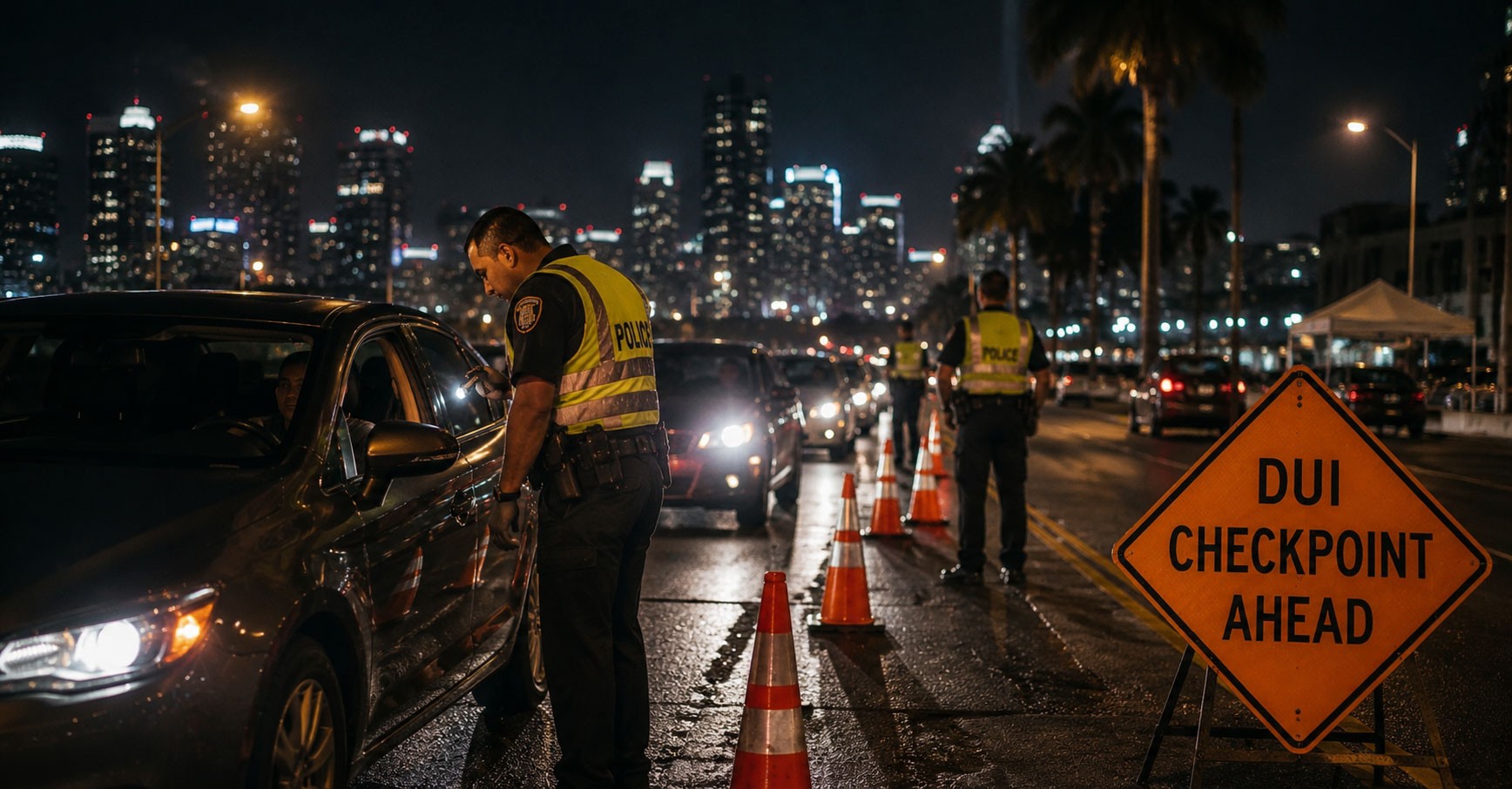
San Diego runs more DUI checkpoints than almost any city in California. The San Diego Police Department, the California Highway Patrol, and county sheriff's deputies all operate them, and they're concentrated in exactly the areas you'd expect: the Gaslamp Quarter, Pacific Beach, North Park, Mission Valley, and along the I-5 corridor between downtown and La Jolla. If you drive in San Diego, especially on a Friday or Saturday night, eventually you'll hit one.
The good news is that DUI checkpoints in San Diego are governed by strict constitutional rules. Officers can't just set up wherever they want, stop whoever they want, and ask whatever they want. There are real limits, and knowing them protects you.
Where San Diego DUI Checkpoints Happen
SDPD publishes checkpoint locations in advance, usually announcing them through press releases and social media a day or two ahead of time. The most common locations include:
The Gaslamp Quarter, especially around 5th Avenue and Market Street near the bar district
Pacific Beach along Garnet Avenue and Mission Boulevard
North Park along University Avenue and 30th Street
Mission Valley near the Friars Road exits
The I-5 corridor through downtown and into La Jolla
Sports Arena Boulevard and the Midway District
East County in El Cajon and along Highway 94
North County in Oceanside, Carlsbad, and Vista
CHP runs additional checkpoints on freeway exits and major arterials throughout the county. Both agencies ramp up significantly around holidays, Padres home games, Chargers tailgates at the old Q, Comic-Con, and the Friday and Saturday nights of major fight cards or concerts.
The Legal Framework: Ingersoll v. Palmer
In 1987, the California Supreme Court decided Ingersoll v. Palmer (43 Cal.3d 1321), which laid out the eight constitutional requirements every DUI checkpoint in California must follow. If a checkpoint fails to meet these standards, evidence collected from it can be suppressed, which often means the case falls apart.
The eight Ingersoll factors are:
Supervisory-level decision making. The decision to set up a checkpoint must come from supervisors, not patrol officers. This protects against arbitrary stops.
Neutral selection criteria. Officers can't pick which cars to stop based on a hunch. The agency must use a mathematical formula like every third car or every fifth car.
Safe conditions. The checkpoint must be set up in a way that's safe for drivers and officers.
Reasonable location. Locations must be chosen based on DUI arrest data, not random whim.
Reasonable time and duration. The checkpoint should run during hours when drunk driving is most likely and shouldn't last longer than necessary.
Clear indicia of official nature. Lights, signs, marked vehicles, and uniformed officers must make it obvious this is a real police operation.
Minimal detention. The stop has to be brief unless officers develop reasonable suspicion of impairment.
Advance publicity. The agency should announce the checkpoint in advance through press releases or media notices.
A defense attorney who knows what to look for can challenge a checkpoint on any of these grounds. We've seen San Diego cases dismissed because of failures around advance publicity or improper neutral selection criteria.
What Officers Can Legally Ask You at a Checkpoint
When you pull up to a checkpoint, officers are allowed to:
Ask for your driver's license, registration, and proof of insurance
Briefly observe you for signs of impairment such as slurred speech, the smell of alcohol, or bloodshot eyes
Ask brief questions like "where are you coming from?" or "have you had anything to drink tonight?"
Direct you to a secondary screening area if they develop reasonable suspicion of DUI
That's it. The initial stop should last only as long as it takes to confirm you're not impaired. If officers want to extend the stop, they need reasonable suspicion of a crime.
What You Don't Have to Do
This is where most drivers get tripped up. There's a real difference between what officers can ask and what you're required to provide.
You don't have to answer questions about drinking. You can politely say "I'd rather not answer questions, officer." That's not an admission of guilt. It's an invocation of your Fifth Amendment rights.
You don't have to perform field sobriety tests. The walk-and-turn, the one-leg stand, the eye-tracking test (HGN), all of these are voluntary in California. Officers won't tell you that, but they're true. You can decline.
You don't have to take the preliminary alcohol screening (PAS) test at the scene. This is the handheld breathalyzer officers carry. Under California Vehicle Code 23612, drivers age 21 and older who are not on DUI probation can refuse the PAS without any license penalty. That refusal cannot be used against you.
The PAS Test vs. the Post-Arrest Chemical Test
This distinction is critical and most people get it wrong.
The PAS test is the roadside handheld breathalyzer. For most adult drivers, it's optional under VC 23612.
The post-arrest chemical test is completely different. Once you've been lawfully arrested for DUI, California's implied consent law (also under VC 23612) requires you to submit to a breath or blood test at the station. Refusing the post-arrest test triggers automatic license consequences from the DMV: a one-year suspension for a first offense, two years for a second, and three years for a third, on top of any criminal penalties.
So the rule of thumb: you can refuse the roadside PAS, but once you're under arrest, the chemical test is mandatory.
What to Do If You're Stopped
Stay calm and polite. Roll your window down. Have your license, registration, and insurance ready. Answer basic identification questions. Beyond that, you have no obligation to provide evidence against yourself.
If officers ask you to step out of the vehicle, comply. If they ask you to perform field sobriety tests, you can politely decline. If they arrest you anyway, do not resist, and ask to speak with an attorney as soon as possible.
Above all, don't argue at the scene. The roadside isn't where DUI cases are won. They're won later, by examining whether the checkpoint complied with Ingersoll, whether the officer had reasonable suspicion to extend the stop, and whether the chemical test was administered properly.
Arrested at a Checkpoint? Your Case Isn't Over.
If you've been arrested at a DUI checkpoint anywhere in San Diego County, the case isn't over. Checkpoint stops have unique vulnerabilities, and an experienced San Diego DUI defense attorney knows how to find them. The Rudolph Firm has challenged checkpoint stops throughout San Diego County and we know what it takes to get charges reduced or dismissed. Call us today for a free consultation and let's go through what happened at your stop.
Author
Colin Rudolph
Attorney
San Diego criminal defense attorney focused on protecting the rights of clients throughout Southern California.