


Drug Crimes
Possession With Intent to Sell in California: How Prosecutors Prove HS 11351
Charged under HS 11351 in California? Learn how prosecutors prove possession with intent to sell, the penalties you face, and key defenses.
Possession With Intent to Sell in California: How Prosecutors Prove HS 11351
There's a world of difference between getting caught with drugs and getting charged with selling them. Simple possession is often a misdemeanor that resolves with diversion or a quick probation. Possession with intent to sell under California Health and Safety Code 11351 is a felony that carries years in state prison and a record that follows you forever. The line between the two charges isn't about how much you had. It's about what prosecutors can prove you were planning to do with it.
If you're facing possession with intent to sell in California, this is what the charge actually requires, how prosecutors build their case, and where these cases tend to break.
What HS 11351 Actually Says
California Health and Safety Code 11351 makes it a felony to possess certain controlled substances "for purpose of sale."
The covered substances include:
Cocaine and crack cocaine
Heroin
Fentanyl
Peyote and mescaline
Most opiates and opium derivatives
Many prescription painkillers when held without a valid prescription
For methamphetamine, the parallel statute is HS 11378. For marijuana sales, the relevant statute is HS 11359, though most marijuana cases now route through different frameworks given Proposition 64. The proof structure for all these charges is similar.
To convict you under HS 11351, the prosecution has to prove four things beyond a reasonable doubt:
You possessed a controlled substance
You knew you possessed it
You knew the substance's nature as a controlled substance
You possessed it with the specific intent to sell it
The first three elements also apply to simple possession. The fourth element, intent to sell, is what makes this a felony.
How Prosecutors Prove Intent to Sell
This is where cases are won and lost. Prosecutors almost never have a confession or a recorded sale. They build the intent element through circumstantial evidence, and the same evidence that looks neutral to you can look damning to a jury when prosecutors string it together.
The categories of evidence they rely on most:
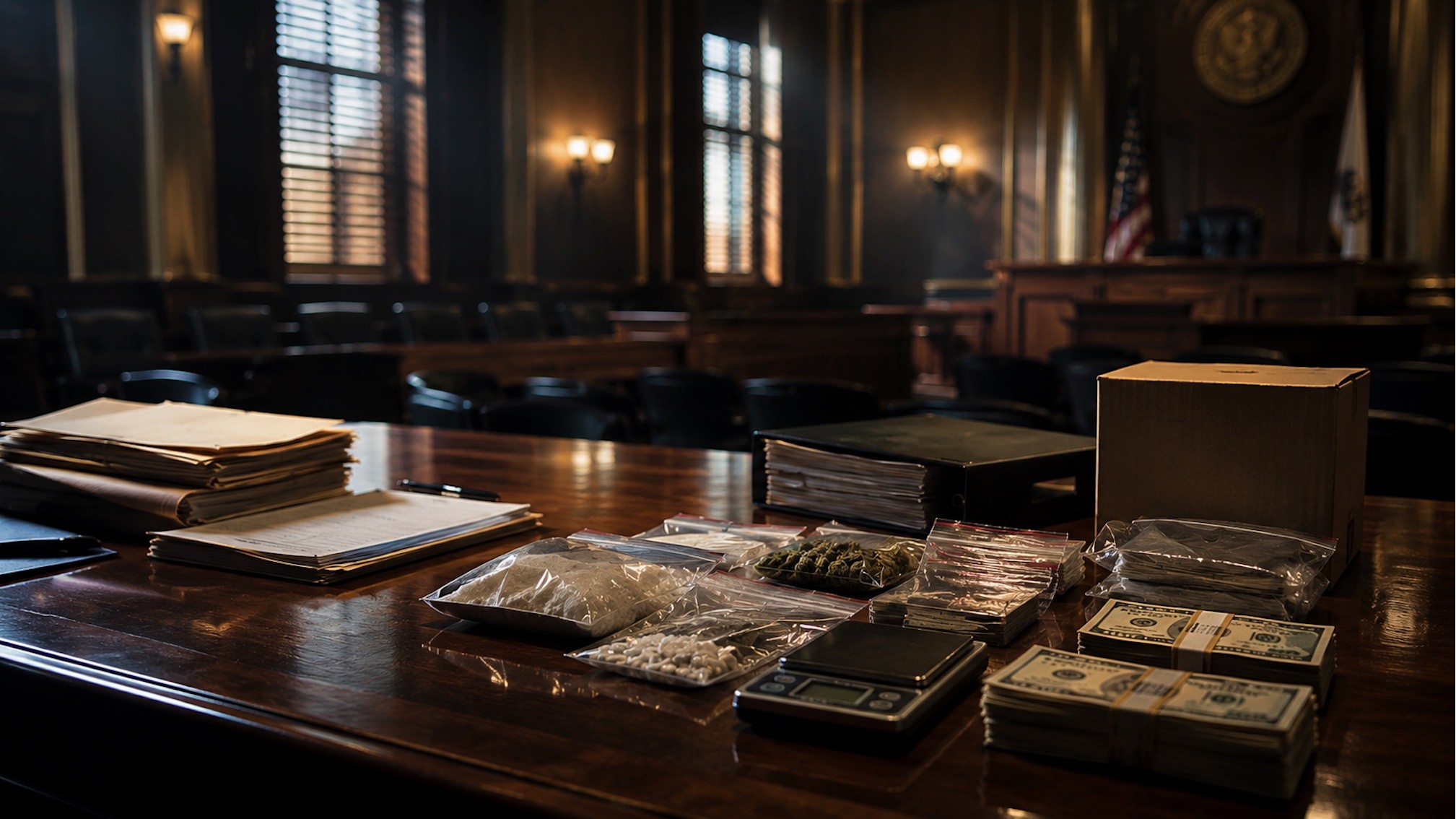
Quantity. The amount possessed is the first thing prosecutors flag. If the amount exceeds what someone would reasonably consume personally over a short period, that points toward sales. Six grams of cocaine might be argued as personal use. Six ounces almost never is.
Packaging. Drugs broken into multiple small baggies, individually weighed, or packaged in standardized amounts strongly suggest distribution. A single large bag is more consistent with personal use.
Scales. A digital scale found alongside controlled substances is one of the most damaging pieces of evidence. Prosecutors argue scales serve only one purpose: weighing product for sale.
Cash. Large amounts of cash, especially in small denominations and rubber-banded bundles, suggest sales proceeds. The classic prosecution narrative is "no job, no bank account, but $3,000 in twenties."
Pay-owe sheets and ledgers. Handwritten lists of names with dollar amounts next to them are documentary evidence of a drug operation.
Cell phone evidence. This is increasingly the centerpiece of HS 11351 prosecutions. Texts arranging meetups, references to quantities, slang for drugs, photos of product, and contact lists with dozens of repeat customers all build the intent case. San Diego prosecutors routinely get search warrants for phones seized during drug arrests.
Lack of paraphernalia for personal use. If someone has cocaine but no straws, mirrors, or other consumption tools, prosecutors argue that absence shows the drugs weren't for personal use.
Witness statements. Statements from confidential informants, undercover officers, or cooperating co-defendants can provide direct evidence of sales activity.
Expert testimony. Most HS 11351 prosecutions in San Diego include testimony from a narcotics officer who's qualified as an expert. The expert reviews the evidence and opines that the totality is "consistent with possession for sale rather than personal use." Defense counsel needs to know how to cross-examine these experts effectively.
Penalties for HS 11351 Conviction
A conviction under HS 11351 is a felony in California. The base penalties include:
2, 3, or 4 years in county jail under realignment (PC 1170(h))
A fine up to $20,000
Formal probation in some cases instead of custody time
A felony record with all the long-term consequences that carries
Penalties escalate sharply with enhancements:
HS 11370.4 adds 3 to 25 additional years for large quantities of cocaine, heroin, or fentanyl
HS 11353 elevates the offense if a minor was involved in the sale
HS 11351.5 for cocaine base (crack) carries enhanced penalties
HS 11352 is a separate, more serious charge for actual transportation or sales rather than just possession with intent
For non-citizens, an HS 11351 conviction is almost always classified as an aggravated felony under federal immigration law, which triggers mandatory detention and deportation regardless of how the case resolves in state court.
Common Defenses to HS 11351 Charges
The most effective defenses depend on the specific facts, but the categories that come up most often in San Diego cases include:
Insufficient evidence of intent to sell. This is the heart of most defenses. If the prosecution's intent evidence is thin, the case can often be reduced to simple possession under HS 11350 (a misdemeanor) or pleaded down significantly.
Lack of knowledge. If you didn't know the substance was a controlled substance, or didn't know it was in your possession at all, the case fails on element two or three. This comes up in cases involving shared vehicles, shared apartments, or borrowed bags.
Unlawful search and seizure. Drugs found through an illegal search are subject to suppression under the Fourth Amendment and the exclusionary rule. If the traffic stop, the search of the vehicle, or the search of the home didn't comply with constitutional requirements, the entire case can collapse.
Personal use. Reframing the evidence to support personal use rather than distribution is often the most realistic defense. Even with significant quantities, the right cross-examination of the prosecution's expert can plant reasonable doubt.
Entrapment. In cases involving undercover stings or confidential informants, entrapment may apply if law enforcement induced conduct you weren't otherwise predisposed to commit.
Valid prescription. For pharmaceutical opiates, a valid prescription is a complete defense to possession charges, though it doesn't necessarily defeat an intent to sell charge if the quantity vastly exceeds prescribed amounts.
San Diego Drug Cases: State Court vs. Federal Court
San Diego's proximity to the border means many drug cases get charged federally instead of in state court. Federal cases land at the Edward J. Schwartz United States Courthouse downtown and operate under the Federal Sentencing Guidelines, which are significantly harsher than California state law and include mandatory minimums.
Whether your case stays in state court at the San Diego Superior Court or gets indicted federally depends on the quantity, the alleged distribution network, and which agencies were involved in the investigation. State HS 11351 cases generally have more flexibility for plea negotiations and alternative sentencing than federal trafficking cases.
Talk to a San Diego Drug Crimes Attorney
A possession with intent to sell charge isn't a sure thing for prosecutors, even when the evidence looks bad on the surface. The intent element is where these cases get attacked, and the specific facts of your search, the seizure, and the prosecution's circumstantial evidence all matter. If you've been charged with possession with intent to sell in California, the Rudolph Firm has handled HS 11351 cases throughout San Diego County and we know how to dismantle the prosecution's intent case. Call us today for a free consultation and let's go through what they actually have on you.
Author

Colin Rudolph
Attorney
San Diego criminal defense attorney focused on protecting the rights of clients throughout Southern California.